
The Impact of Fake Medicines
The Impact of Fake Medicines
Estimating the true cost of substandard and falsified cancer medicines is difficult as definitions, detection, and reporting remain limited and inconsistent. Emerging evidence indicates that the impacts of SF medicines are far reaching, from eroding public health systems, to inflicting psychological damage and suppressing national development. The well-being of entire populations, in particular vulnerable groups like the poor and the chronically ill, is threatened by SF medicines.
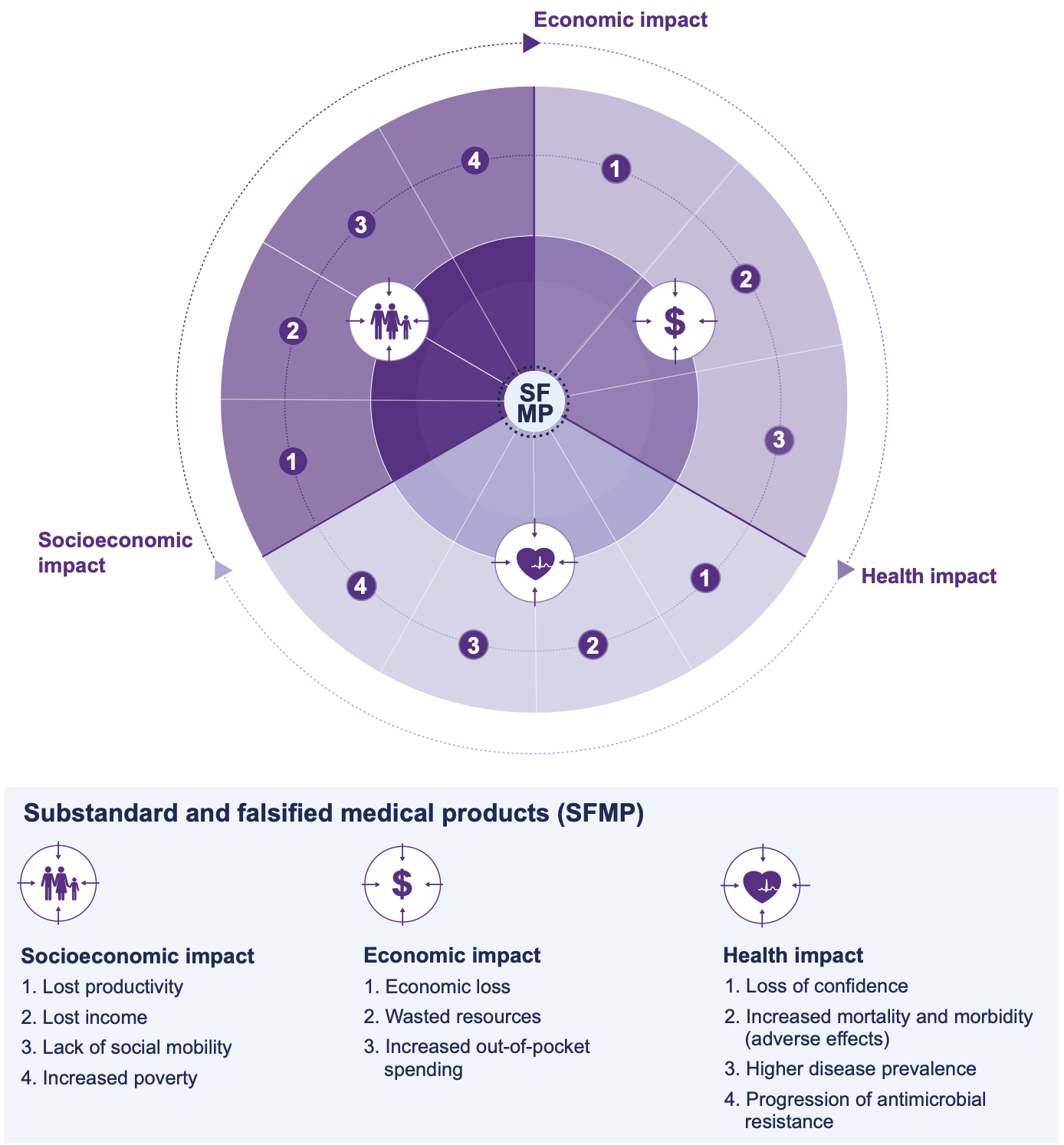
Source: WHO 2025

- Adverse reactions and toxicity: Contaminated or incorrectly formulated drugs can cause severe side effects or organ damage, increasing morbidity and mortality.
- Treatment failure: Patients may receive insufficient or no active ingredient, leading to cancer progression.
- Delayed access to effective therapy: Time lost on ineffective SF drugs can reduce survival chances.
- Loss of trust in healthcare: Patients may lose confidence in clinicians, hospitals, or the medicine supply system.
- Psychological distress: Anxiety, fear, and hopelessness increase when treatments fail or worsen health.

- Financial burden: Families may spend money on ineffective or harmful treatments, often repeatedly.
- Costs from prolonged illness (travel, caregiving, funeral expenses).
- Lost productivity and missed work/school.
- Increased poverty: Lost income, reduced household stability and reduced social mobility.

- Across all categories of SF medicines, low- and middle-income countries spend an average of US $30.5 billion per year.
- In the U.S., extra adverse events associated with drugs purchased through illegal online pharmacies result in US $67 billion in healthcare costs annually.
- The sales of cancer medicines through illegal online pharmacies in the US between 2017 and 2022 has generated US $14.6 billion, making it the most profitable drug in illegal online pharmacies.
- Economic losses through health system losses due to ineffective or wasted treatment, increased use of health services, and longer hospital stays.