The EveryDoseMatters campaign equips patients, health professionals, and caregivers with the tools to prevent, detect, and combat fake cancer medicines.
Substandard and falsified (also known as “fake”) cancer medicines* have been found in 100 countries. Fake cancer medicines are among the greatest threats to cancer care today, undermining patient trust in legitimate treatments, the integrity of healthcare systems, and hard-won progress against cancer.
The threat is real. Yet, those affected most know the least.
Substandard and falsified (also known as “fake”) cancer medicines* have been found in over 100 countries. Fake cancer medicines are among the greatest threats to cancer care today, undermining patient trust in legitimate treatments, the integrity of healthcare systems, and hard-won progress against cancer.
The threat is real. Yet, those affected most know the least.
*Cancer medicines are inclusive of chemotherapy
Fake cancer medicines, including chemotherapy, targeted therapies, immunotherapies, and hormonal treatments — also called substandard or falsified medicines — are medicines that are poor quality, incorrectly made, or deliberately misrepresented. They may contain the wrong ingredients, too little of the real drug, or toxic substances. Fake cancer medicines include pill and intravenous therapies.
Fake medicines put patients’ lives at risk by delaying effective care and causing dangerous side effects.
When access to cancer medicines is constrained by availability or cost, some patients turn to unregulated online pharmacies, increasing their exposure to falsified medicines worldwide.
Today, substandard and falsified cancer medicines are found in over 100 countries, including in high-income countries.
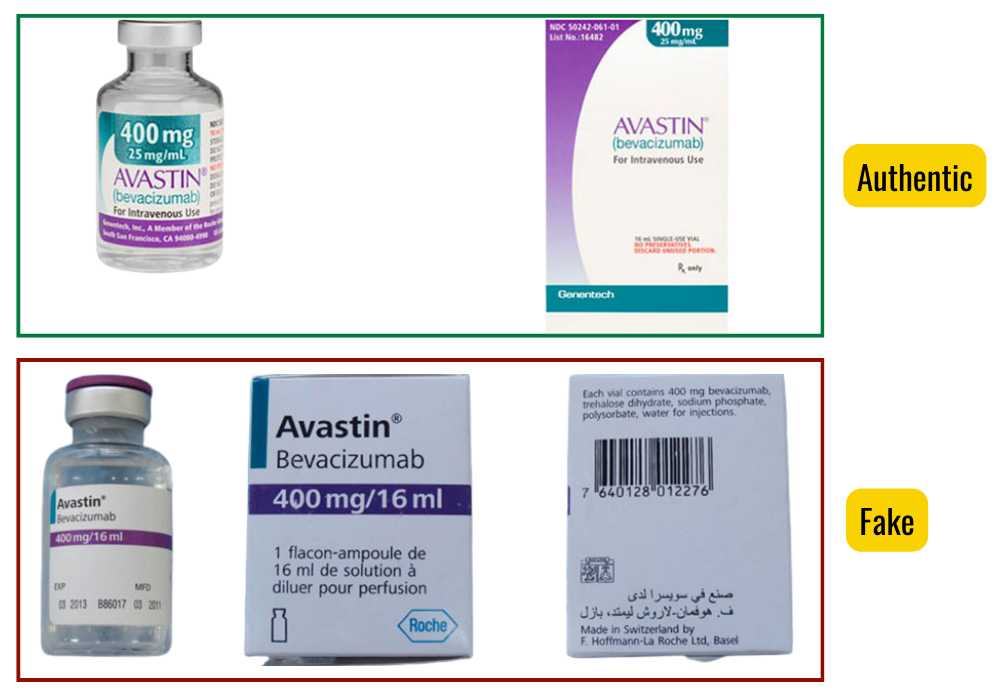
Authentic (top) versus fake (bottom) Avastin that was distributed in the United States in 2012. Mistakes in packaging, such as lack of branding and foreign language instructions, are visible in the fake Avastin.
Source: Genentech (2012). Counterfeit Avastin identified in the U.S.
Available at: https://www.gene.com/media/statements/ps_021412
Why is this occurring?
What is the scale?
Why does this matter?
Cancer medicines frequently face shortages. A recent scoping review attributes shortages to quality control issues and countries’ reliance on international trade to obtain these medicines. Alongside elevated prices, shortages create a high-profit opportunity for counterfeiters to exploit the demand for cancer medicines.
Supply chains are poorly regulated and countries — particularly those that are low- and middle-income — are unequipped to detect and respond to fake medicines. This allows them to circulate rapidly, even in the legal supply chain.
Counterfeiting of cancer medicines increased by 33% between 2022 and 2024.
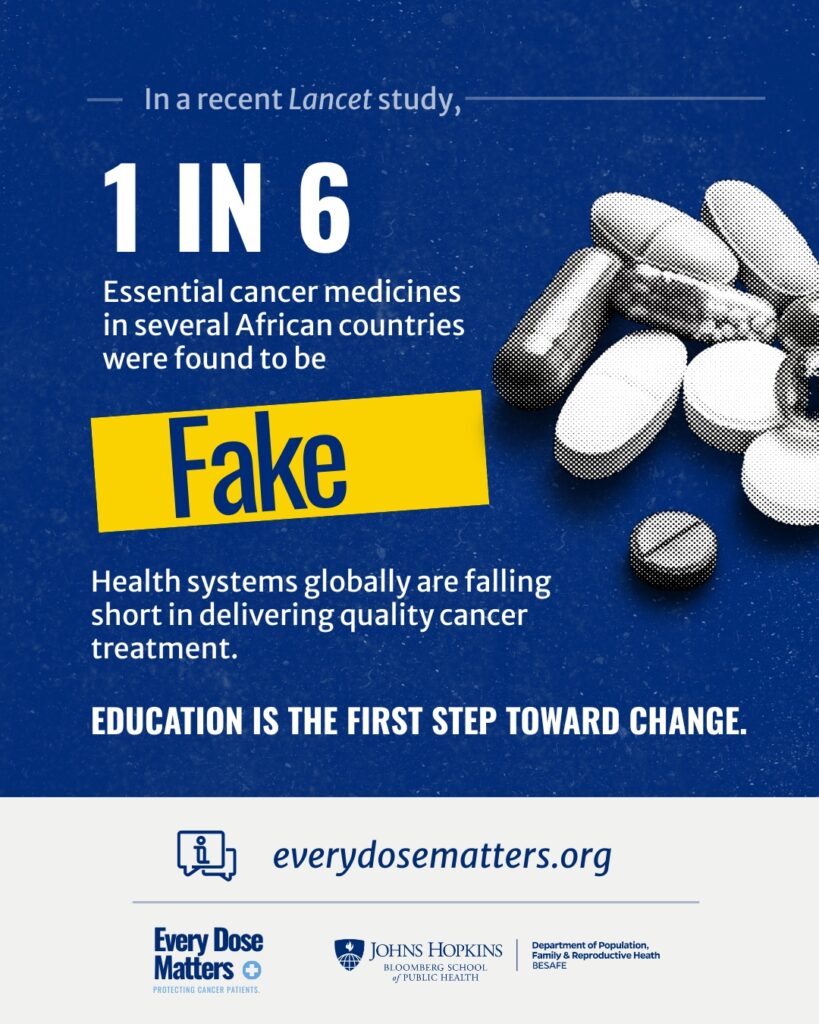
Estimates may be even higher for substandard and falsified cancer medicines. In Africa, 1 in 5 cancer medicines were found to be substandard in a recent Lancet Global Health study.
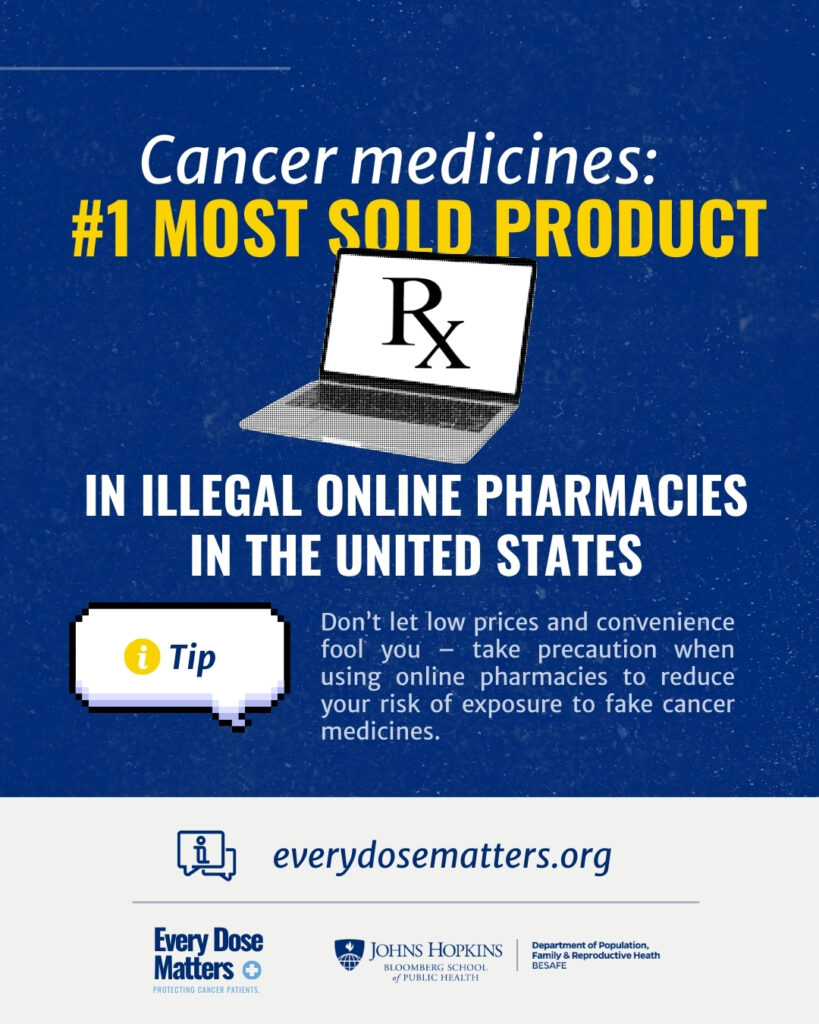
In the U.S., 95% of online pharmacies are estimated to be illegal. 24% of Americans who have used an online pharmacy have been exposed to substandard and falsified medicines. Cancer medicines are the top-selling medicine category on online pharmacies that are operating without authorization.
At best, fake cancer medicines delay access to real treatments and let cancer progress. At worst, they result in adverse events, organ failure, or death. While mortality estimates for cancer medicines are unknown, substandard and falsified medicines across all categories kill 500,000 in Africa each year.
When patients doubt the efficacy of their medicines, they lose trust in their medical care and the system that is supposed to protect them. Without trust, health systems break as they fail to reach and provide services to the most vulnerable populations.
Across all categories of fake medicines, low- and middle-income countries are losing US $30.5 billion per year on managing issues related to these medicines.
Even as cancer treatments continue to advance, challenges in access and affordability persist. When patients face these barriers, exposure to unsafe or falsified medicines becomes a broader patient-safety risk—one that threatens to widen existing global health inequities.
Support the movement to protect cancer care by by sharing our posters, infographics and social media posts. Get featured in our campaign by using our editable templates to share how you’re protecting cancer care. Clinics, healthcare providers, patients, and caregivers are encouraged to participate.


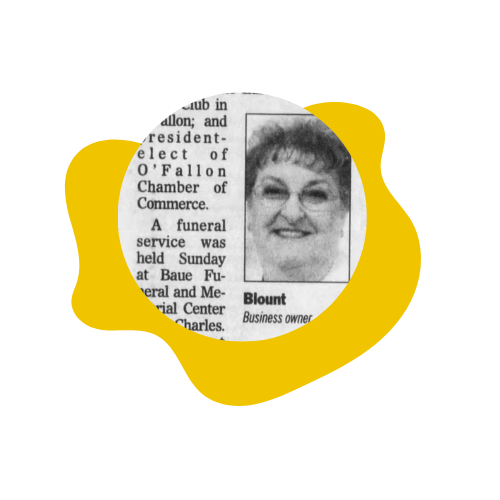
Maxine Blount, United States
A hard-working businesswoman, Maxine didn’t let a cancer diagnosis stop her from living an active lifestyle. With the help of her anemia medicine Procrit, she maintained some of her old energy after starting chemotherapy. One day, the medicine stopped working and the Procrit she was using was found to be falsified. Anemia allowed her cancer to progress, ultimately resulting in her death. In her final months, Maxine described how fearful she became, completely losing trust in the medical system: “You have faith in your pharmacy and faith in the medicine, faith in the packaging and the people doing the buying that they know what they’re doing. Now, whenever I get my medication I wonder where it’s coming from. But what can I do? I need it. I have to have it. And I’m scared of it, every time.”

Betty Hunter, United States
Described as a vivacious 76-year-old Arizona grandmother with lung cancer, Betty was never the same again after doctors unknowingly injected her with fake Avastin in 2011. Her health deteriorated after the incident, and she died three months later. The doctors had purchased the drug from an illegal Canadian online pharmacy, which sourced their drugs from Turkey. The fake drug contained water and mold instead of any active ingredient. While mourning her loss, the family was left wondering whether Betty could have lived longer had she received legitimate Avastin instead of a fake version.

Laxmi Kumari, Nepal
Laxmi Kumari’s 2-year-old son is being treated for cancer in Kathmandu, Nepal. The family has contributed multiple months’ salaries worth of rupees to access treatment in a private facility in Kathmandu. Even with this substantial financial investment and the extensive travel involved to get to Kathmandu, Laxmi has no assurance that treatment will use legitimate medicines. “We have no way of knowing the quality of the medications being used in his treatment,” said Laxmi. “We rely entirely on what the doctors recommend.” The entire family risks being dragged further into poverty if the chemotherapy treatment fails due to fake medicines, since that will result in additional expensive care.
Unnamed Pharmacist, Malawi
A pharmacist working in cancer care in Malawi said chemotherapy drugs arriving to his clinic would look off – sometimes changing color. Patients desperately seeking chemotherapy medicines would be turned away. “We had patients scheduled for clinic,” he said, “and then we had to break the news to them that we don’t have medicines.” The pharmacist also reports his patients overdosed on drugs for leukemia and lymphoma, suffering severe adverse reactions such as vomiting and nausea. These drugs were found to have excess active ingredient in a study happening at the time.
What are substandard and falsified cancer medicines?
Fake cancer medicines — also called substandard or falsified medicines — are drugs that are poor quality, incorrectly made, or deliberately misrepresented. They may contain the wrong ingredients, too little of the real drug, or toxic substances. Pill and intravenous therapies can be substandard or falsified.
How can I know if my cancer medicine is real or fake?
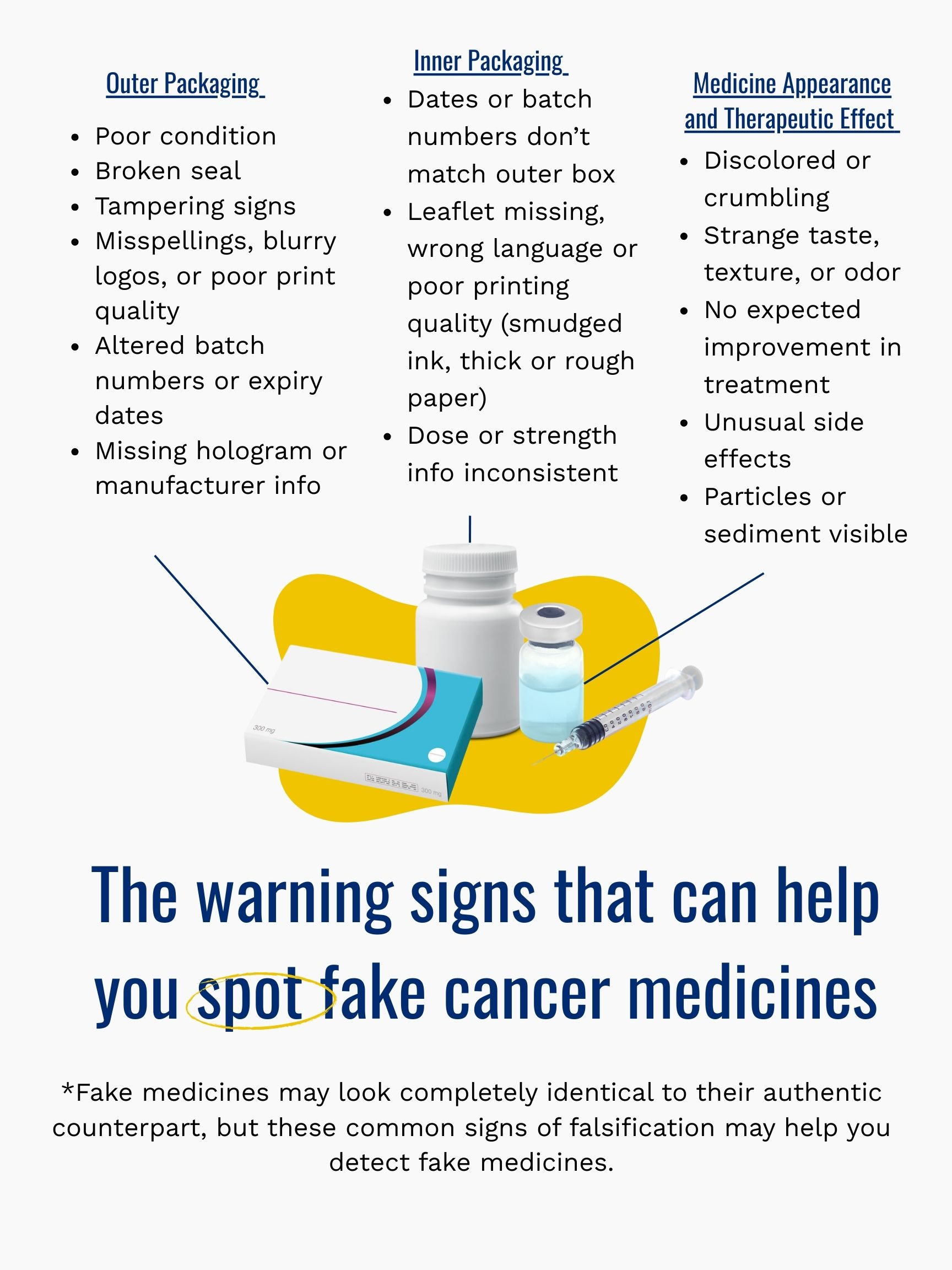
Fake cancer medicines may look completely identical to their authentic counterpart and confirmation of authenticity requires laboratory testing. However, there are steps you can take to protect yourself before purchasing your medicine and during use. Learn more about these steps here.
- Precaution before purchasing: Be alert to suspicious supply sources, don’t be fooled by online pharmacies that seem too good to be true, and request a sample of your prescribed medicine, if available, or familiarize yourself with the product.
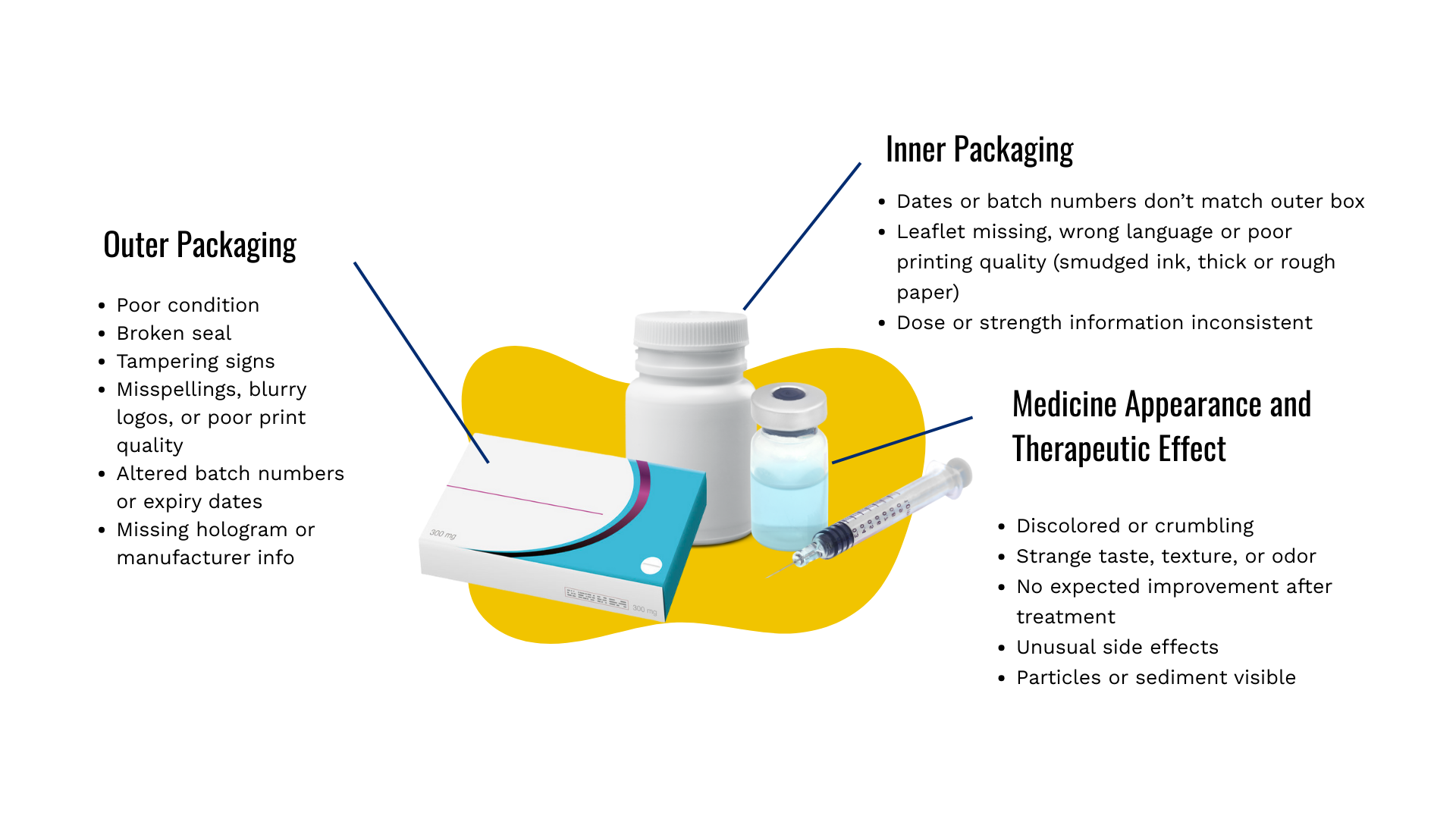
- Inspect your medicines and packaging: Look for common signs of falsification and poor quality such as tampering in the package or medicine, incorrect labelling, lack of branding, odd textures or foreign languages, as shown in this graphic.
- Examine medicine effectiveness and safety: After using the medicine, pay attention to unexpected side effects, lack of effect, or a strange taste, smell, or texture.
- Speak up and report when suspicious: Immediately stop use and report it to your healthcare provider. Report and document all symptoms, side effects, red flags, and the location or website of purchase.
What should I do if I suspect my medicine is fake?
Immediately stop use, keep the suspected product in a secure location, and speak to your healthcare provider. Additionally, report your concerns to regulatory authorities and the pharmaceutical company.
Are online pharmacies safe to use?
In the U.S., 95% of online pharmacies are estimated to be illegal. Twenty-four percent of Americans who have used an online pharmacy have been exposed to substandard and falsified medicines. Thus, you should take precautions when using an online pharmacy. This means verifying its domain (use the NABP Safe Site Search Tool), ensuring it requires a doctor’s prescription, and has the following information:
- Name of the pharmacy providing the service
- The geographic addresses at which the pharmacy is established and its details (e-mail address, telephone, and fax numbers)
- Professional title of the pharmacist responsible and where title was granted
- Professional body with which the responsible pharmacist is registered and the relevant supervisory authority
- Reference to the applicable professional rules in the country of establishment and how to access them
How does this campaign help me as a patient?
This campaign offers clear, practical information and safety tips for patients to use before, during, and after cancer treatment, helping ensure medicines are used safely and effectively. Most of the information is relevant to people worldwide, though some content is currently tailored to North American audiences. We plan to adapt and expand the website to better serve care teams and patients in diverse regions in the near future.
Are substandard and falsified medicines only a problem in low- and middle-income countries?
While the risk is higher in these countries, with the rise of online pharmacies, substandard and falsified cancer medicines have been found almost everywhere — even in high-income regions like the United States.
How can healthcare providers identify and protect their patients from substandard and falsified cancer medicines?
Pause — Check before you trust.
Take 30 seconds for a quick medication safety check. Ask where the patient obtained the medicine and visually inspect the tablets or packaging if efficacy seems off. A short pause can prevent harm.
Probe — Ask and verify.
Ask patients where and how they obtained their medicine. Use the NABP Safe Pharmacy Tool or QR code to confirm safe sources. Reinforce the message: only buy from verified pharmacies.
Protect — Teach to spot the fakes.
Show patients three simple red flags: misspellings on labels, pills that look or feel wrong, or packaging that’s been opened or tampered with. Learn the signs here. Empower them to check before they take.
Pass it on — Report and share.
Report suspected fakes to the FDA (MedWatch or Unsafe Online Pharmacies portal). Encourage patients to report as well. Add a reporting link or phrase in your EHR to make it easy.
What should I do as a provider if I suspect substandard and falsified medicines in my clinic or pharmacy?
Report to regulatory authorities in your country, law enforcement, and the pharmaceutical company providing the medicine. Learn more here.
Are substandard and falsified medicines only a problem in low- and middle-income countries?
While the risk is higher in these countries, with the rise of online pharmacies, substandard and falsified cancer medicines have been found almost everywhere — even in high-income regions like the United States.
Why are cancer medicines especially vulnerable to falsification?
Cancer medicines are often high-cost, high-demand therapies that may also face periodic supply constraints, creating strong incentives for bad actors to exploit the market. The complexity of oncology manufacturing—including specialized inputs and rigorous quality requirements—can increase production pressures across the supply chain, particularly when combined with global sourcing of raw materials. In addition, complex distribution pathways, multiple intermediaries, and uneven regulatory oversight in some regions can create opportunities for falsified products to enter legitimate markets. Reflecting these vulnerabilities, oncology medicines have been identified as the most commonly sold products in illegal online pharmacies in the U.S.
Why are cancer patients especially vulnerable to substandard and falsified medicines?
Cancer treatment plans are time-sensitive and precise: any time wasted managing complications of substandard and falsified medicines risks irreversible harm to a patient’s prognosis. Potentially hazardous ingredients in falsified medicines are especially dangerous because cancer patients are often immunocompromised.
How does this campaign help me as a provider?
This campaign provides educational information, safety tips, and resources that you can use while purchasing medicines for your clinic, communicating with your patients, and monitoring your patient’s treatment progress. Most of the information on this website is applicable to healthcare providers globally but some of it is tailored for audiences in North America. We plan to adapt this website to target patients in diverse regions in the near future.